“Use Your Words”
At St. Paul’s Day School this is a phrase we say frequently.
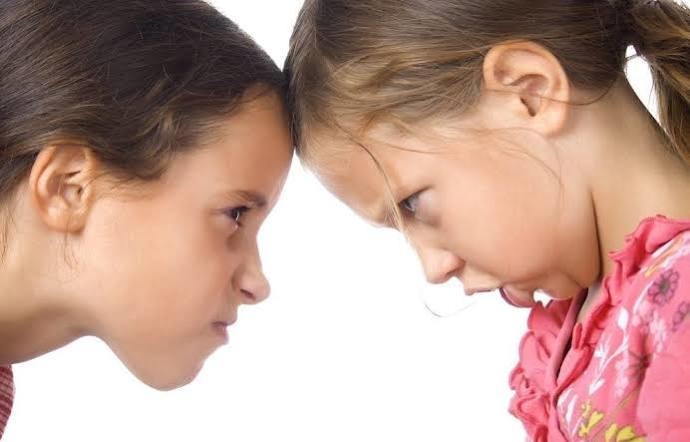
Developmentally, children at age three have up to 1000 words in their vocabulary. Before this they are growing physically at an incredible rate, and they tend to respond to their wants and needs with actions instead of words. Those little muscles move quickly and get the attention desired. They’ve tested those physical responses and found that they are pretty effective at expressing their emotions. (‘Ever seen an 18-month-old arch their back and kick when you are trying to put them in the carseat?! They aren’t capable of saying, “Excuse me mother dear. I am quite tired and hungry, and I would not like to be buckled into this excessively warm carseat!”)
Once they’ve reached the age of three, they’ve developed more sophisticated verbal skills. But they need to practice making spoken words their response until it becomes a natural habit that is an even more effective form of communication. Sometimes they forget. They might swat a toy away from another child, or push them to get out of the way. We remind them that now that they are older, they have a powerful tool – and we often give them an appropriate example. “Can I play with that?” or even better, “Can I play with that when you are done?” Sometimes the response from the other child (who isn’t feeling threatened because the question was simple and straightforward) is a quick “Sure. Here.” With the toy being handed over peacefully. Or we might remind a child to “say “Excuse me” and Billy will know you would like to go by.” The positive result proving to the child that words work!
Manners are taught this way as well. When a child demands something, we give them the proper way to ask politely. “May I please have another strawberry?” and after receiving said strawberry… “Thank you!” I must confess that having worked with young children for so many years, my inclination is to provide “kind words” to everyone who needs them. From the young, to the “not so young.” My husband was even the recipient of a reminder several years ago, “why thank you dear wife.” Using good manners isn’t automatic. It’s a skill learned by imitating our role models, being given an example and practicing. We’ll model good manners and kind words here at St. Paul’s Day School, and do our very best to help your child “use their words” successfully!
Pro Tip from Mrs. Ryan
If you want to help your child practice their verbal skills you can play a game! Pick up a couple of their favorite stuffed toys. One will say things the right way “May I please have a cookie?”, and one does things the wrong way (the toy “grabs” the imaginary cookie from the “kind toy”. Ask your child, “which one did made a “thumbs up” or “kind” choice? And talk about it! It’s easier for your child to recognize positive and negative choices when it’s the behavior of their toy!