
Tag Archive for: Delray Beach

“Can Do” Attitude

One of the developmentally typical things that happens when your child is about 2 years old is the “No, me do it!” phase.

They REALLY want to do things for themselves. But they get frustrated when it doesn’t go as smoothly as they thought. Their little hands haven’t got the fine motor control that many tasks require.

As they get older, they find more success doing little things.

  • They can put on their own socks.
  • They can open and close doors and drawers.
  • They can pick up their toys. (Notice I said “can” not “will”.)
  • They can feed themselves with spoons and forks.
  • They can even dress themselves.

But… it takes more time for them to do it independently. A task that would take an adult 3 minutes, can take three or four times that. And, their adult will need to be right there as they try their best, as they often get distracted or find they don’t know how to do the task properly, and have an epic meltdown in total frustration.

In our “hurry up” world, it’s much easier and more efficient to do all the tasks ourselves rather than slow down and wait for our preschooler to figure it out by themselves. But one of the most important things we can do is foster independence in our children (at home and at school.)

  • Encourage all their earnest attempts to try new things.
  • Be prepared to offer assistance only when they have already given it their best effort.
  • Build in extra time to allow the task to be completed without everyone losing their minds watching the clock.
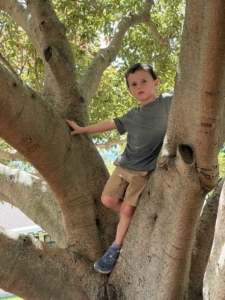
I once heard a quote that has stuck with me as I’ve watched all the children in my care grow over the last 46 years. “Competence builds Confidence!” I don’t know who said it. (I’m sorry, if you know who the author is, I’ll be happy to credit them.) And I must say, I’ve found that to be true. With each completed task or activity, each new concept understood or academic achievement accomplished… self-confidence grows. Along with the belief that a child can do even more if they try.

At St. Paul’s Day School we make time… to let children try. To let them practice till they learn a new skill. To give them the encouragement to attempt new and challenging work all in the guise of play. And when they leave us, we cheer their “can do!” attitude and know we’ve given them a foundation of competence that shines with confidence!


Pro Tip from Mrs. Ryan

When you know you have to be out of the house quickly… prep ahead of time. Find all the items that need to be worn, transported or made (like snacks or lunches) and put them where they are easily grabbed when the time comes. Set an alarm for 25 minutes before departure and let your child have a 5 minute “heads up”. “We’re going to get ready to go to school in 5 minutes!” Then turn it into fun. Use funny voices, make funny faces, tell them the first one all ready gets to beep the car’s horn or unlock the car with the key fob or sing their favorite song in the car. Having a goal will help them focus!


All the world’s a stage…

There’s nothing cuter than watching two 4-year-olds playing dress-up and using their imaginations as they pretend to be grown-ups. Whether they are wearing fire fighter costumes or princess dresses, feather boas or tool belts, they are exploring the world as they have experienced or wondered about it.
It may seem like simple child’s play. But in reality, their brains are working at warp speed. Using theme-specific vocabulary, creating scenarios in which their “character” explores the possibilities of an imaginary environment, they process information they’ve received by watching their families and neighbors. Or that they’ve seen on a “screen” somewhere. Be it animated or live action. But in each case, they are using their working memory, flexible thinking and self-control. They are problem solving and practicing their communication skills. When they are pretending to be doctors or nurses or veterinarians, they are practicing empathy for their patients and becoming aware of others’ perspectives and emotions.

Developmentally, by the time they are 4, children’s imaginative play becomes more complex and detailed. They actively use their executive functioning skills to understand and maintain the boundary between make-believe and reality. The stories become more creative and incorporate imaginary objects as they play with their peers. They often guide their friends in the “right” way to play out a fantasy situation. “You say this, then I say this.”

At St. Paul’s Day School, we support dramatic play by providing a variety of toys, props and costumes that inspire those eager imaginations. We add to them and change them to keep the children from getting tired of the same old toys. We play along, sometimes becoming a patient and helping talk about the emotions of a doctor’s visit, or letting them talk out their worry about a pet who has been sick. Sometimes changing places and becoming the student while they become the teacher!

Your child will naturally want to “pretend” with their stuffed animals and toys, let them lead the play and ask interested questions to encourage them to think “outside the box”. Short periods of “make believe” can strengthen your relationship with your child, and you can model how to use objects creatively and teach social skills with toys who “act out.”

Enjoy the conversations! They will invariably help you see how quickly your child has developed their many skills!


Mrs. Ryan’s Pro Tip
Pretend play can be a great way to help your child adjust their behavior. Using two of their toys, act out a behavior that you want your child to recognize as a “thumbs down” choice. Let them tell you what the problem is and how to solve it. When they are not the ones who are “in trouble” they are much more likely to recognize the negative behavior.

“Use Your Words”

At St. Paul’s Day School this is a phrase we say frequently.

Developmentally, children at age three have up to 1000 words in their vocabulary. Before this they are growing physically at an incredible rate, and they tend to respond to their wants and needs with actions instead of words. Those little muscles move quickly and get the attention desired. They’ve tested those physical responses and found that they are pretty effective at expressing their emotions. (‘Ever seen an 18-month-old arch their back and kick when you are trying to put them in the carseat?! They aren’t capable of saying, “Excuse me mother dear. I am quite tired and hungry, and I would not like to be buckled into this excessively warm carseat!”)

Once they’ve reached the age of three, they’ve developed more sophisticated verbal skills. But they need to practice making spoken words their response until it becomes a natural habit that is an even more effective form of communication. Sometimes they forget. They might swat a toy away from another child, or push them to get out of the way. We remind them that now that they are older, they have a powerful tool – and we often give them an appropriate example. “Can I play with that?” or even better, “Can I play with that when you are done?” Sometimes the response from the other child (who isn’t feeling threatened because the question was simple and straightforward) is a quick “Sure. Here.” With the toy being handed over peacefully. Or we might remind a child to “say “Excuse me” and Billy will know you would like to go by.” The positive result proving to the child that words work!

Manners are taught this way as well. When a child demands something, we give them the proper way to ask politely. “May I please have another strawberry?” and after receiving said strawberry… “Thank you!” I must confess that having worked with young children for so many years, my inclination is to provide “kind words” to everyone who needs them. From the young, to the “not so young.” My husband was even the recipient of a reminder several years ago, “why thank you dear wife.” Using good manners isn’t automatic. It’s a skill learned by imitating our role models, being given an example and practicing. We’ll model good manners and kind words here at St. Paul’s Day School, and do our very best to help your child “use their words” successfully!

Pro Tip from Mrs. Ryan

If you want to help your child practice their verbal skills you can play a game! Pick up a couple of their favorite stuffed toys. One will say things the right way “May I please have a cookie?”, and one does things the wrong way (the toy “grabs” the imaginary cookie from the “kind toy”.) Ask your child, “which one did made a “thumbs up” or “kind” choice? And talk about it! It’s easier for your child to recognize positive and negative choices when it’s the behavior of their toy!

Oh No! It’s raining… AGAIN!

You look out the window and realize that noise you heard was rain… again! And it doesn’t want to stop any time soon. But you have a three or four-year-old who doesn’t understand why they can’t go outside and run and play. Now just imagine you have a room full of four-year-olds all getting agitated because they can’t go outside! That’s what’s been happening at St. Paul’s Day School.

Luckily, we have some talented teachers who have all sorts of tricks up their sleeves. Here are some of the things they do and suggestions for things you can do at home with your preschooler.

First things first, some physical movement is a must! I walked into our preK-3 classroom and there was a dance party going on! Little ones doing their best impressions of dancing skeletons with arms swinging back and forth. You can find lots of appropriate pre-k dance songs on YouTube or Spotify. Another alternative is Yoga… try Cosmic Kids Yoga! The kids get a story to go along with the poses!

Then when they’ve got the wiggles out, we love to play with playdough. Don’t have any at home? Your child will love making some with you! Here’s my favorite recipe for NO FAIL PLAYDOUGH that lasts 6 months:
1.5 cups flour
1/2 cup salt
2 teaspoons cream of  tartar
2 tablespoons oil
1 cup of boiling water
food coloring (optional but fun)

Mix the dry ingredients. (Little ones love pouring the dry ingredients into the big mixing bowl.) Then an ADULT does this part – Boil the water and pour it into a measuring cup. Add the oil to it and as much food coloring as you would like. Pour the water mixture into the dry ingredients.  Stir with a sturdy spoon.

Once it’s not too hot for a child to touch, they can do some stirring. When it starts to clump together and it’s not drippy, dump it on the table and an adult starts to knead. When it’s just the right temperature, your child can knead it too. It feels so good when it’s warm and the kids love to smell and squeeze it. (If it is too dry, add a few drops of boiled water, too wet, add a little flour.)

The cream of tartar (found in the spice section of the grocery store) is the secret. You’ll get smooth playdough that just begs for kids to come play! (Hint: If you have a stand mixer, this is even easier! Dry ingredients first, wet added gradually using a dough hook. It’s a cinch!) Store in an air-tight container!

Playdough is great for strengthening little hands for writing. And measuring is a great math skill. Creating shapes and “snakes” leads to all sorts of possibilities including making letters and numbers, and encouraging a child’s imagination and vocabulary.

And when your child is done playing with that, they can build. Use blocks or magna tiles or boxes. Anything that has flat sides is fair game! Your child will learn about balance and gravity and physics like we do at St. Paul’s Day School!

Story books are always a great way to not only pass the time, but to share special snuggle time and build literacy. Use funny voices, ask your child what they think will happen next and enjoy learning more about how your child sees the world.

Cook together! You’ll find that children will try new foods if they help cook them! And along the way you can talk about how many items you are cooking along with colors, shapes, smells, and textures. Practice positional words like: beside, behind, under, over, and on top.

Coloring and watercolors are fun on a rainy day! And dry erase markers work great on mirrors and windows (with some adult supervision.)

Games are good too… Candyland, Bingo, Jenga, Uno. Go for it!

Make each other laugh. It makes the day that much better!

Pro Tip from Mrs. Ryan:

Don’t hesitate to be silly around your child.  It builds strong bonds, relieves stress and teaches them emotional resilience!

Who’s Who in the School (Part 3)

Who has a room that is an office, a meeting space, a library, a Stay N Play space and a place to go to learn about “Thumbs up choices”? Yes, it’s me! Mrs. Liz Ryan.

As the Director of St. Paul’s Day School, I wear many “hats” and have a variety of responsibilities and my office reflects that! But you’ll notice, there are always toys, chairs of “just the right size” (for little people and big people), and a welcoming smile on my face.

One of my favorite things to do each day is greet each family at the car line and say good morning to each child. It’s important to let children know that they are cared for and valued from the moment they get out of their car in the morning to the moment they climb back into their carseat at the end of their day. Are they smiling? Are they tired? Are they excited? Are they anxious? Checking in with each little one and their parent (or grandparent) gives useful information to the teachers and me that we can use to shape our teaching that day. And if my silly earrings or preschool print clothes can coax a smile or a giggle out of a little one who might be unsure, so much the better!

We are blessed to be a small school with three classrooms (and a multi-use room) where each student is treated like an individual and have their needs met. No crowds of children trying to get attention. Enough friends, but not too many children in a class. That allows the teachers to spend time with each child and get to know them well.

Building relationships with the whole family helps a child know that they are part of a loving community. Knowing the names of moms, dads, siblings, grandparents and pets, and creating connections with them, helps us as staff understand the children and their life experiences. And when we become “one big happy family” we can learn about how to succeed in the world! And we do!

I’ve raised three children of my own (two sons and a daughter) and helped raise hundreds of other little ones in my 47 years of working with children. It always makes me smile when “my” little people come back to visit me when they have grown up a bit… whether they are 8, 14, 25 or 48, I am filled with joy because they have all left handprints on my heart!

Along the way, I’ve learned a lot. And around the Day School I have a tendency to share “Pro Tips from Mrs. Ryan!”  Things that will work most of the time that I’ve learned through experience. So this blog seems to be an appropriate place to share them with you. I hope you’ll enjoy them!


PRO TIP #1

Mornings can be chaotic and confusing when you are trying to get the family out of the house every day. (Especially with a three or four-year-old in tow!) Finding backpack, folder, lunchbox, sneakers and Show & Tell toy is enough to get everyone snarling and hollering at one another! My Pro Tip is: designate a space you will see on your way out of the house, lay out a placemat or make a rectangle out of tape on the floor and make sure you “put your school friends to bed” for the night before your child goes to sleep. (It should be big enough to hold all the things mentioned above.) In the morning you’ll be set to go without the hassle of having to chase down that left sneaker or find out if the folder is in the car or if the lunchbox has an open container of yogurt inside!

You might even have time for a quick dance party to get everyone smiling!


Who’s Who in the School? (Part 1)

Have you met our wonderful teachers yet? Let’s pretend you are entering St. Paul’s Day School for the first time as a three-year-old… You walk into a cheerful classroom with tables and chairs just your size, lots of interesting books that you can touch any time you want, and fun posters and pictures on the walls. There are all sorts of toys to play with (your favorites!) You sit down on a bright colored rug, and you hear a voice say, “I’m so happy to meet you!” A smiling lady sits down next to you and says, “What’s your name? I’m Ms. Karen!” She listens as you tell her all about your Mom and Dad and your dog “Ruff” and she tells you all about the fun activities she has planned for your class and introduces you to your new best friend!

You see, Ms. Karen is skilled at social emotional growth as well as introducing PreK-3 students to letters, numbers, colors and shapes. She is an experienced and passionate Early Childhood Educator. Having worked with ages one to five, Ms. Karen understands that this time of life in a child’s development creates the foundation for all the learning to come. A child’s brain reaches 90% of its adult size by the age of 5. And because children learn more and faster at this time, we cannot waste time on empty “entertainment.”

Ms. Karen has practical experience with three children of her own. Ages 7 to 12. She’s been “knee deep” in education at home as well as school! Her own experience with unique learning styles gives her a deep understanding that children do not all process information the same way, at the same rate. So, she’s a creative partner in the discovery which is the way each individual child learns.

This all sounds very serious. But Ms. Karen also has the most contagious laugh, an impish sense of humor, a sweet and gentle heart and an artistic way of looking at the world. Three-year-olds love her silly songs, her fabulous storytelling and her willingness to get on the floor and play!