
Tag Archive for: children

All the world’s a stage…

There’s nothing cuter than watching two 4-year-olds playing dress-up and using their imaginations as they pretend to be grown-ups. Whether they are wearing fire fighter costumes or princess dresses, feather boas or tool belts, they are exploring the world as they have experienced or wondered about it.
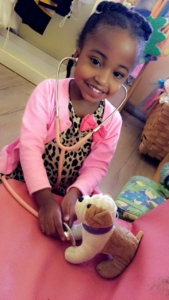
It may seem like simple child’s play. But in reality, their brains are working at warp speed. Using theme-specific vocabulary, creating scenarios in which their “character” explores the possibilities of an imaginary environment, they process information they’ve received by watching their families and neighbors. Or that they’ve seen on a “screen” somewhere. Be it animated or live action. But in each case, they are using their working memory, flexible thinking and self-control. They are problem solving and practicing their communication skills. When they are pretending to be doctors or nurses or veterinarians, they are practicing empathy for their patients and becoming aware of others’ perspectives and emotions.

Developmentally, by the time they are 4, children’s imaginative play becomes more complex and detailed. They actively use their executive functioning skills to understand and maintain the boundary between make-believe and reality. The stories become more creative and incorporate imaginary objects as they play with their peers. They often guide their friends in the “right” way to play out a fantasy situation. “You say this, then I say this.”

At St. Paul’s Day School, we support dramatic play by providing a variety of toys, props and costumes that inspire those eager imaginations. We add to them and change them to keep the children from getting tired of the same old toys. We play along, sometimes becoming a patient and helping talk about the emotions of a doctor’s visit, or letting them talk out their worry about a pet who has been sick. Sometimes changing places and becoming the student while they become the teacher!

Your child will naturally want to “pretend” with their stuffed animals and toys, let them lead the play and ask interested questions to encourage them to think “outside the box”. Short periods of “make believe” can strengthen your relationship with your child, and you can model how to use objects creatively and teach social skills with toys who “act out.”

Enjoy the conversations! They will invariably help you see how quickly your child has developed their many skills!


Mrs. Ryan’s Pro Tip
Pretend play can be a great way to help your child adjust their behavior. Using two of their toys, act out a behavior that you want your child to recognize as a “thumbs down” choice. Let them tell you what the problem is and how to solve it. When they are not the ones who are “in trouble” they are much more likely to recognize the negative behavior.

“Rookie Mistake”

I’ve been in the Early Childhood “biz” for decades. Literally! But today I made a rookie mistake. What was it? I read a book to a group of three and four-year-olds without having read it through myself first. Argh! It looked innocent enough… 26 naughty monkeys and each described in a short rhyme with a letter of the alphabet. What could go wrong?

Well, I didn’t take into consideration the various personalities in the room, the time of day (afternoon rest time), or the fact that I probably would be interrupted multiple times as parents came to pick up their children.

It all started well, darling little ones seated on their rest mats with stuffed animals in their arms and soft blankets over their laps. Soft lullaby music in the background. Dimmed lights. I thought, give them 10 minutes and they will snuggle down and quietly recharge before we head outside to play until their parents arrive.

HA!

As I read about the antics of the “Naughty Little Monkeys”, they started jockeying for position, moving in front of one another to see the pages better. Then scooting the mats too close together, finally overlapping and causing territorial disputes. We were up to the monkey who was jumping on his bed and the one who was chewing gum and blowing bubbles that got all over the quilt and her sibling (all to the delight of the children being read to) when the first parent arrived. I put down the book, and we all rushed out to unlock the gate, say goodbye and lock the gate when he left. Then I herded them in and got them settled and re-started the story.

Mysteriously, the energy level of my small charges started to rebound with each naughty monkey’s rhyme, spiking as first one child, and then two, and then three started to hoot like chimpanzees bouncing on their mats. Shoes came off. Blankets were tossed. Stuffed animals were thrown across the room. Sigh.

Needless to say, we never finished the story. (I hope there were some logical consequences for those naughty monkeys!)

I started to sing. (Having first turned off the lullabies that were pointless at this juncture.) They joined in (we love Hokey Pokey and Head and Shoulders, Knees and Toes – especially at high speed!) and I finally got them redirected and acting like children instead of naughty monkeys. We played “I can pick up toys faster than you!” and in moments the room was presentable and my superhero helpers had put the mats, blankets and toys away.

More parents arrived and before I knew it, I found myself locking the gate for the last time of the day.

It was a busy afternoon. And as often happens, I learned, actually I had a refresher course, that children are very susceptible to suggestion. That the wild behavior in the story was just too tempting for this group at this time. And that music soothes the savage beast (or even “naughty monkeys”!)

Pro Tip from Mrs. Ryan

Obviously, never read a book to a group of children without first having read it yourself!

And, as a freebie… whenever you need to redirect and grab a child’s attention, start singing! Whether you have a great voice or not!


“Use Your Words”

At St. Paul’s Day School this is a phrase we say frequently.

Developmentally, children at age three have up to 1000 words in their vocabulary. Before this they are growing physically at an incredible rate, and they tend to respond to their wants and needs with actions instead of words. Those little muscles move quickly and get the attention desired. They’ve tested those physical responses and found that they are pretty effective at expressing their emotions. (‘Ever seen an 18-month-old arch their back and kick when you are trying to put them in the carseat?! They aren’t capable of saying, “Excuse me mother dear. I am quite tired and hungry, and I would not like to be buckled into this excessively warm carseat!”)

Once they’ve reached the age of three, they’ve developed more sophisticated verbal skills. But they need to practice making spoken words their response until it becomes a natural habit that is an even more effective form of communication. Sometimes they forget. They might swat a toy away from another child, or push them to get out of the way. We remind them that now that they are older, they have a powerful tool – and we often give them an appropriate example. “Can I play with that?” or even better, “Can I play with that when you are done?” Sometimes the response from the other child (who isn’t feeling threatened because the question was simple and straightforward) is a quick “Sure. Here.” With the toy being handed over peacefully. Or we might remind a child to “say “Excuse me” and Billy will know you would like to go by.” The positive result proving to the child that words work!

Manners are taught this way as well. When a child demands something, we give them the proper way to ask politely. “May I please have another strawberry?” and after receiving said strawberry… “Thank you!” I must confess that having worked with young children for so many years, my inclination is to provide “kind words” to everyone who needs them. From the young, to the “not so young.” My husband was even the recipient of a reminder several years ago, “why thank you dear wife.” Using good manners isn’t automatic. It’s a skill learned by imitating our role models, being given an example and practicing. We’ll model good manners and kind words here at St. Paul’s Day School, and do our very best to help your child “use their words” successfully!

Pro Tip from Mrs. Ryan

If you want to help your child practice their verbal skills you can play a game! Pick up a couple of their favorite stuffed toys. One will say things the right way “May I please have a cookie?”, and one does things the wrong way (the toy “grabs” the imaginary cookie from the “kind toy”.) Ask your child, “which one did made a “thumbs up” or “kind” choice? And talk about it! It’s easier for your child to recognize positive and negative choices when it’s the behavior of their toy!

Who’s Who in the School (Part 3)

Who has a room that is an office, a meeting space, a library, a Stay N Play space and a place to go to learn about “Thumbs up choices”? Yes, it’s me! Mrs. Liz Ryan.

As the Director of St. Paul’s Day School, I wear many “hats” and have a variety of responsibilities and my office reflects that! But you’ll notice, there are always toys, chairs of “just the right size” (for little people and big people), and a welcoming smile on my face.

One of my favorite things to do each day is greet each family at the car line and say good morning to each child. It’s important to let children know that they are cared for and valued from the moment they get out of their car in the morning to the moment they climb back into their carseat at the end of their day. Are they smiling? Are they tired? Are they excited? Are they anxious? Checking in with each little one and their parent (or grandparent) gives useful information to the teachers and me that we can use to shape our teaching that day. And if my silly earrings or preschool print clothes can coax a smile or a giggle out of a little one who might be unsure, so much the better!

We are blessed to be a small school with three classrooms (and a multi-use room) where each student is treated like an individual and have their needs met. No crowds of children trying to get attention. Enough friends, but not too many children in a class. That allows the teachers to spend time with each child and get to know them well.

Building relationships with the whole family helps a child know that they are part of a loving community. Knowing the names of moms, dads, siblings, grandparents and pets, and creating connections with them, helps us as staff understand the children and their life experiences. And when we become “one big happy family” we can learn about how to succeed in the world! And we do!

I’ve raised three children of my own (two sons and a daughter) and helped raise hundreds of other little ones in my 47 years of working with children. It always makes me smile when “my” little people come back to visit me when they have grown up a bit… whether they are 8, 14, 25 or 48, I am filled with joy because they have all left handprints on my heart!

Along the way, I’ve learned a lot. And around the Day School I have a tendency to share “Pro Tips from Mrs. Ryan!”  Things that will work most of the time that I’ve learned through experience. So this blog seems to be an appropriate place to share them with you. I hope you’ll enjoy them!


PRO TIP #1

Mornings can be chaotic and confusing when you are trying to get the family out of the house every day. (Especially with a three or four-year-old in tow!) Finding backpack, folder, lunchbox, sneakers and Show & Tell toy is enough to get everyone snarling and hollering at one another! My Pro Tip is: designate a space you will see on your way out of the house, lay out a placemat or make a rectangle out of tape on the floor and make sure you “put your school friends to bed” for the night before your child goes to sleep. (It should be big enough to hold all the things mentioned above.) In the morning you’ll be set to go without the hassle of having to chase down that left sneaker or find out if the folder is in the car or if the lunchbox has an open container of yogurt inside!

You might even have time for a quick dance party to get everyone smiling!