
Tag Archive for: social emotional

Truth or Consequences

Did you know that there is a city called “Truth or Consequences, New Mexico”? Yep, the city, formerly known as “Hot Springs, New Mexico”, renamed itself after a radio game show called “Truth or Consequences” in 1950. It was a wise move on the part of the city who gained lots of attention from the name change and the ensuing fame that came with it.

Consequences are often thought of as negative. In the game show above, if a contestant answered a question incorrectly, they were required to pay a penalty (usually they performed a silly, embarrassing or messy stunt.) But consequences are not always negative. Merriam-Webster says a consequence is: a result, effect, or conclusion produced by a preceding cause, action, or set of conditions.

So, there are as many positive consequences as there are negative. For example, the result of an adult working a fulltime job is earning a paycheck to purchase the things they want or need. The result of cleaning up one’s toys is being able to find what you’re looking for next time you want to play with it or having a calm space to relax when you’re tired. Or, if a child puts their shoes on when asked, they can go outside to play with their friends!

At St. Paul’s Day School we teach about both kinds of consequences, and the children adjust their behavior based on their understanding of the sort of consequence they would like. Consistency is the secret to helping children begin to choose a “thumbs up” option. When the child gets the same result from their action or behavior over and over, they know what to expect. We help them by naming expectations before there is a consequence, which allows them to choose.

Here’s a sweet example. One of our three-year-olds is very affectionate. He loves to hug. But in the beginning of the year, he often barreled into the teacher or blindsided a friend without warning and there were several mishaps. Children knocked over, tears, teachers who firmly set the little one back as they explained why the wild hugging wasn’t safe. He now understands he can ask, “can I give you a hug?” and the “consequence” is a delighted smile and a “yes!”

Our little ones are earning smiles and high fives as they choose to use “their words” and good manners and gentle hands. As the teachers and I affirm the appropriate actions and choices, the children strive to please. They are still three- and four-year olds, so sometimes they make mistakes. But the more consistent we are with consequences, the more often they choose to earn a positive reward!

Pro Tip from Mrs. Ryan

Sometimes the best way to help a child make the right choice, is to praise another child who is doing the right thing. “Wow, I love the way Bobby is listening to the story! Thank you Bobby!”
Let’s Play!

Why Free Play is an Essential Part of a Successful Early Childhood Program


Free Play. It’s not a time when the teacher is “on break” and the kids are running around going crazy.  Free play is a developmentally necessary time that is an unstructured, child-led, and self-directed activity when children choose what to do, what materials to use, and how to play without adult-imposed rules or direct instruction. That said, the adult, be it parent or teacher, is right there using open ended questions to stimulate the child’s ability to plan, invent, problem solve, build vocabulary and strengthen fine and gross motor skills.

What does that look like?


A child building forts out of pillows and blankets is using critical thinking skills to estimate how large the fort needs to be. And what sort of creatures live there. And why they go into the fort. They are learning the physics of building walls and supports. They are experiencing the forces of gravity and balance and tension. A new world is created with stuffed animals as a civilization.

Barbies and action figures are giving the child the opportunity to learn social emotional skills. The “characters” act out familiar scenarios and practice sharing, conflict resolution and using their imaginations.

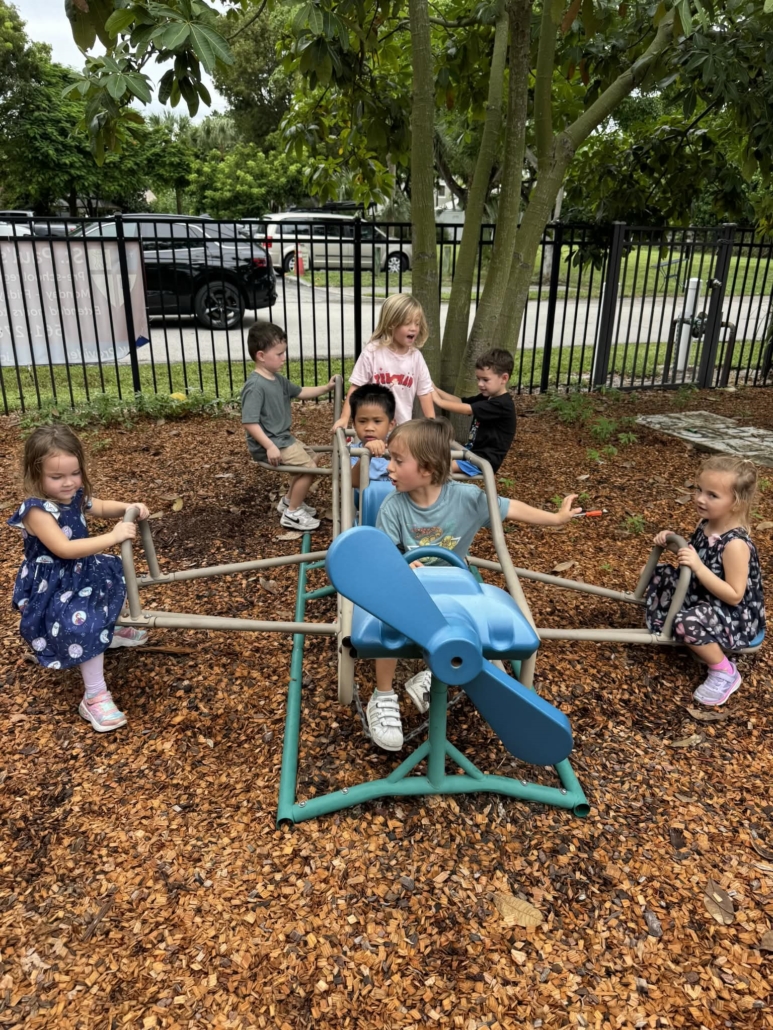
Outdoor free play includes running and climbing and exploring nature. Miniature “entomologists” examine insects as intently as any research scientist! They work on identifying, classifying and studying the behavior of their favorite “creepy crawlies”.

Artwork builds several skills, as children draw or paint they are strengthening little hands for more intense writing. They are using their creativity as they choose the media to express their feelings. They are identifying shapes and colors and how the picture is composed. When they draw with chalk, they are learning how much force it takes to make thin and thick lines. They discover the power of water as they make their chalk drawings disappear. They invent 3D sculptures with playdough, learning about structures and foundations and size.

These lessons learned through play create a network of neural connections or synapses  which typically requires about 400 repetitions through standard drills. Learning and exploring through play can reduce that number to around 10 to 20 repetitions!

That’s why at St. Paul’s Day School, we make sure there is free play for at least half of our school day. Both indoor and outdoor. We play to learn!


Pro Tip from Mrs. Ryan

Confused as to what I mean when I say adults should expand upon a child’s learning experience by asking “open ended questions”? Any question that cannot be answered with “yes” or “no” works! Generally the sorts of questions children ask us… “Why?” “How?” “When?” “What?”

Why is Preschool so Important?

I am often told, “it must be nice to have a job where you can just play with little ones all day!” My response is always a smile. And, a gentle explanation of why it’s so important for a child to have a solid early childhood education.

During the time a child is in preschool, from 3  to 5 years old, their body and brain are developing quickly. Synapses and bones and muscles rapidly becoming stronger, more efficient, preparing for the tasks of learning to come.

These children are developing language skills, reasoning, problem solving and a complex cognitive understanding of the world around them. They go from a toddler who tumbles over the “roses in the rug” and who puts everything in their mouth to figure it out, to an explorer who ponders the why’s and how’s of everything they experience.

Things we take for granted are important ways the early childhood educator provides the foundation for a child’s lifelong learning.

We read books. We read to teach our small charges that letters have names and sounds and that they are different than numbers. That if you put the letters together, they make words and that when you put the words together, they make sentences that tell us a story. And that all of those letters and words go left to right! We expand their minds with vocabulary they haven’t heard before and ideas that are new and interesting. They learn to hold books, to turn pages and to appreciate humor and mystery and the thrill of a surprise ending!

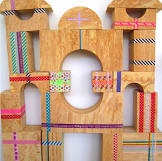
We build with blocks. And that teaches a child about math, spatial properties, physics and social interactions. They begin to understand counting, sorting, size comparison, patterning, and geometry! They start recognizing concepts like balance, symmetry, weight, and dimensions. They use scientific reasoning when they experience cause and effect and the force of gravity.

We color with crayons. Strengthening little hands and improving fine motor skills is essential to the ability to write. When they choose colors and make decisions about how their art will look, they learn to plan. These little scholars learn to deal with challenging feelings when their picture doesn’t look the same on the paper as it does in their mind. They are focusing for longer periods of time, improving hand eye coordination and attention span.

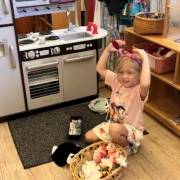
We use our imaginations. When the children enter the dress up area, they become a parent, a pilot, a chef, a princess, a doctor, and all sorts of other exciting characters. Each different role includes the ability to use their memory of the behaviors of each character. To use vocabulary that is particular for that play scenario. They learn to work with friends and play cooperatively. They practice their conversational skills and social emotional regulation.

Phew! That’s a lot in a simple day of play! Without it, without the stimulation of their amazing and incredible brains and exercising their growing muscles and bones, they fall far behind their peers. Their love of learning doesn’t develop. And there is no solid foundation to build on for the future.

That’s why preschool is so important. Why St. Paul’s Day School is so important. As Mr. Fred Rogers so famously said, “Play is often talked about as if it were a relief from serious learning. But for children play is serious learning. Play is really the work of childhood.”


Pro Tip from Mrs. Ryan:

Want to help your child remember your phone number or address? It’s really important information if they need help. Sing it! Children learn the words to songs much more rapidly than they do spoken words.  So use a “piggyback” tune (Row, Row, Row Your Boat, Twinkle Twinkle Little Star, London Bridge is Falling Down etc.) and sing the words!