

Tag Archive for: Pro Tip

“Can Do” Attitude

One of the developmentally typical things that happens when your child is about 2 years old is the “No, me do it!” phase.

They REALLY want to do things for themselves. But they get frustrated when it doesn’t go as smoothly as they thought. Their little hands haven’t got the fine motor control that many tasks require.

As they get older, they find more success doing little things.

  • They can put on their own socks.
  • They can open and close doors and drawers.
  • They can pick up their toys. (Notice I said “can” not “will”.)
  • They can feed themselves with spoons and forks.
  • They can even dress themselves.

But… it takes more time for them to do it independently. A task that would take an adult 3 minutes, can take three or four times that. And, their adult will need to be right there as they try their best, as they often get distracted or find they don’t know how to do the task properly, and have an epic meltdown in total frustration.

In our “hurry up” world, it’s much easier and more efficient to do all the tasks ourselves rather than slow down and wait for our preschooler to figure it out by themselves. But one of the most important things we can do is foster independence in our children (at home and at school.)

  • Encourage all their earnest attempts to try new things.
  • Be prepared to offer assistance only when they have already given it their best effort.
  • Build in extra time to allow the task to be completed without everyone losing their minds watching the clock.
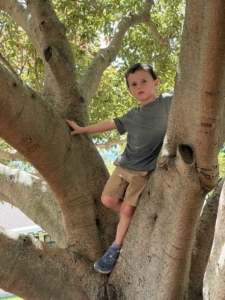
I once heard a quote that has stuck with me as I’ve watched all the children in my care grow over the last 46 years. “Competence builds Confidence!” I don’t know who said it. (I’m sorry, if you know who the author is, I’ll be happy to credit them.) And I must say, I’ve found that to be true. With each completed task or activity, each new concept understood or academic achievement accomplished… self-confidence grows. Along with the belief that a child can do even more if they try.

At St. Paul’s Day School we make time… to let children try. To let them practice till they learn a new skill. To give them the encouragement to attempt new and challenging work all in the guise of play. And when they leave us, we cheer their “can do!” attitude and know we’ve given them a foundation of competence that shines with confidence!


Pro Tip from Mrs. Ryan

When you know you have to be out of the house quickly… prep ahead of time. Find all the items that need to be worn, transported or made (like snacks or lunches) and put them where they are easily grabbed when the time comes. Set an alarm for 25 minutes before departure and let your child have a 5 minute “heads up”. “We’re going to get ready to go to school in 5 minutes!” Then turn it into fun. Use funny voices, make funny faces, tell them the first one all ready gets to beep the car’s horn or unlock the car with the key fob or sing their favorite song in the car. Having a goal will help them focus!
“Rookie Mistake”

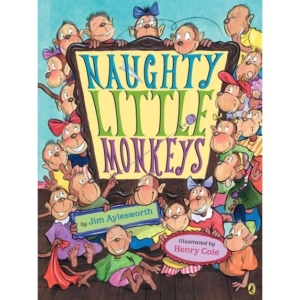
I’ve been in the Early Childhood “biz” for decades. Literally! But today I made a rookie mistake. What was it? I read a book to a group of three and four-year-olds without having read it through myself first. Argh! It looked innocent enough… 26 naughty monkeys and each described in a short rhyme with a letter of the alphabet. What could go wrong?

Well, I didn’t take into consideration the various personalities in the room, the time of day (afternoon rest time), or the fact that I probably would be interrupted multiple times as parents came to pick up their children.

It all started well, darling little ones seated on their rest mats with stuffed animals in their arms and soft blankets over their laps. Soft lullaby music in the background. Dimmed lights. I thought, give them 10 minutes and they will snuggle down and quietly recharge before we head outside to play until their parents arrive.

HA!

As I read about the antics of the “Naughty Little Monkeys”, they started jockeying for position, moving in front of one another to see the pages better. Then scooting the mats too close together, finally overlapping and causing territorial disputes. We were up to the monkey who was jumping on his bed and the one who was chewing gum and blowing bubbles that got all over the quilt and her sibling (all to the delight of the children being read to) when the first parent arrived. I put down the book, and we all rushed out to unlock the gate, say goodbye and lock the gate when he left. Then I herded them in and got them settled and re-started the story.

Mysteriously, the energy level of my small charges started to rebound with each naughty monkey’s rhyme, spiking as first one child, and then two, and then three started to hoot like chimpanzees bouncing on their mats. Shoes came off. Blankets were tossed. Stuffed animals were thrown across the room. Sigh.

Needless to say, we never finished the story. (I hope there were some logical consequences for those naughty monkeys!)

I started to sing. (Having first turned off the lullabies that were pointless at this juncture.) They joined in (we love Hokey Pokey and Head and Shoulders, Knees and Toes – especially at high speed!) and I finally got them redirected and acting like children instead of naughty monkeys. We played “I can pick up toys faster than you!” and in moments the room was presentable and my superhero helpers had put the mats, blankets and toys away.

More parents arrived and before I knew it, I found myself locking the gate for the last time of the day.

It was a busy afternoon. And as often happens, I learned, actually I had a refresher course, that children are very susceptible to suggestion. That the wild behavior in the story was just too tempting for this group at this time. And that music soothes the savage beast (or even “naughty monkeys”!)

Pro Tip from Mrs. Ryan

Obviously, never read a book to a group of children without first having read it yourself!

And, as a freebie… whenever you need to redirect and grab a child’s attention, start singing! Whether you have a great voice or not!


Why is Preschool so Important?

I am often told, “it must be nice to have a job where you can just play with little ones all day!” My response is always a smile. And, a gentle explanation of why it’s so important for a child to have a solid early childhood education.

During the time a child is in preschool, from 3  to 5 years old, their body and brain are developing quickly. Synapses and bones and muscles rapidly becoming stronger, more efficient, preparing for the tasks of learning to come.

These children are developing language skills, reasoning, problem solving and a complex cognitive understanding of the world around them. They go from a toddler who tumbles over the “roses in the rug” and who puts everything in their mouth to figure it out, to an explorer who ponders the why’s and how’s of everything they experience.

Things we take for granted are important ways the early childhood educator provides the foundation for a child’s lifelong learning.

We read books. We read to teach our small charges that letters have names and sounds and that they are different than numbers. That if you put the letters together, they make words and that when you put the words together, they make sentences that tell us a story. And that all of those letters and words go left to right! We expand their minds with vocabulary they haven’t heard before and ideas that are new and interesting. They learn to hold books, to turn pages and to appreciate humor and mystery and the thrill of a surprise ending!

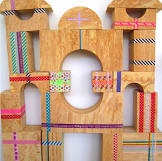
We build with blocks. And that teaches a child about math, spatial properties, physics and social interactions. They begin to understand counting, sorting, size comparison, patterning, and geometry! They start recognizing concepts like balance, symmetry, weight, and dimensions. They use scientific reasoning when they experience cause and effect and the force of gravity.

We color with crayons. Strengthening little hands and improving fine motor skills is essential to the ability to write. When they choose colors and make decisions about how their art will look, they learn to plan. These little scholars learn to deal with challenging feelings when their picture doesn’t look the same on the paper as it does in their mind. They are focusing for longer periods of time, improving hand eye coordination and attention span.

We use our imaginations. When the children enter the dress up area, they become a parent, a pilot, a chef, a princess, a doctor, and all sorts of other exciting characters. Each different role includes the ability to use their memory of the behaviors of each character. To use vocabulary that is particular for that play scenario. They learn to work with friends and play cooperatively. They practice their conversational skills and social emotional regulation.

Phew! That’s a lot in a simple day of play! Without it, without the stimulation of their amazing and incredible brains and exercising their growing muscles and bones, they fall far behind their peers. Their love of learning doesn’t develop. And there is no solid foundation to build on for the future.

That’s why preschool is so important. Why St. Paul’s Day School is so important. As Mr. Fred Rogers so famously said, “Play is often talked about as if it were a relief from serious learning. But for children play is serious learning. Play is really the work of childhood.”


Pro Tip from Mrs. Ryan:

Want to help your child remember your phone number or address? It’s really important information if they need help. Sing it! Children learn the words to songs much more rapidly than they do spoken words.  So use a “piggyback” tune (Row, Row, Row Your Boat, Twinkle Twinkle Little Star, London Bridge is Falling Down etc.) and sing the words!