
Biennial Conference or How I Ended Up in Los Angeles!
 It’s a blessing to be a member of the National Association of Episcopal Schools (NAES). This incredible organization is focused on supporting Episcopal schools across the country. From Early Childhood programs through High School, students in Episcopal schools are given an education that promotes personal formation through moral, spiritual, intellectual, creative, physical and social development. Every two years NAES hosts a conference to invite clergy, chaplains, administrators, and educators to learn and worship together, sharing information in workshops and plenary sessions and fostering fellowship to create a community who provide each other with valuable resources in their ministry to children and young people. It was great to see our Presiding Bishop The Most Reverend Sean W. Rowe, head of the Episcopal Church in the United States, there to share his appreciation for the ministry of Episcopal schools and all it’s leaders! (I even got to introduce myself as well as receive communion from him!)
I’m actively involved with NAES and have been since 2016. Each Tuesday I meet with Early Education Directors and Heads of School on a one-hour Zoom. These wise and experienced leaders have been an invaluable source of support for me regarding all things Episcopal and educational. During Covid their counsel helped me form the policies needed to keep the school running and healthy. With anywhere from 5 to 25 school leaders on each call, I’m able to use this “brain-trust” to help me discern the direction to go in any complex situation. And beyond that, I have made lifelong friendships and found people I can journey with in this ministry of education.
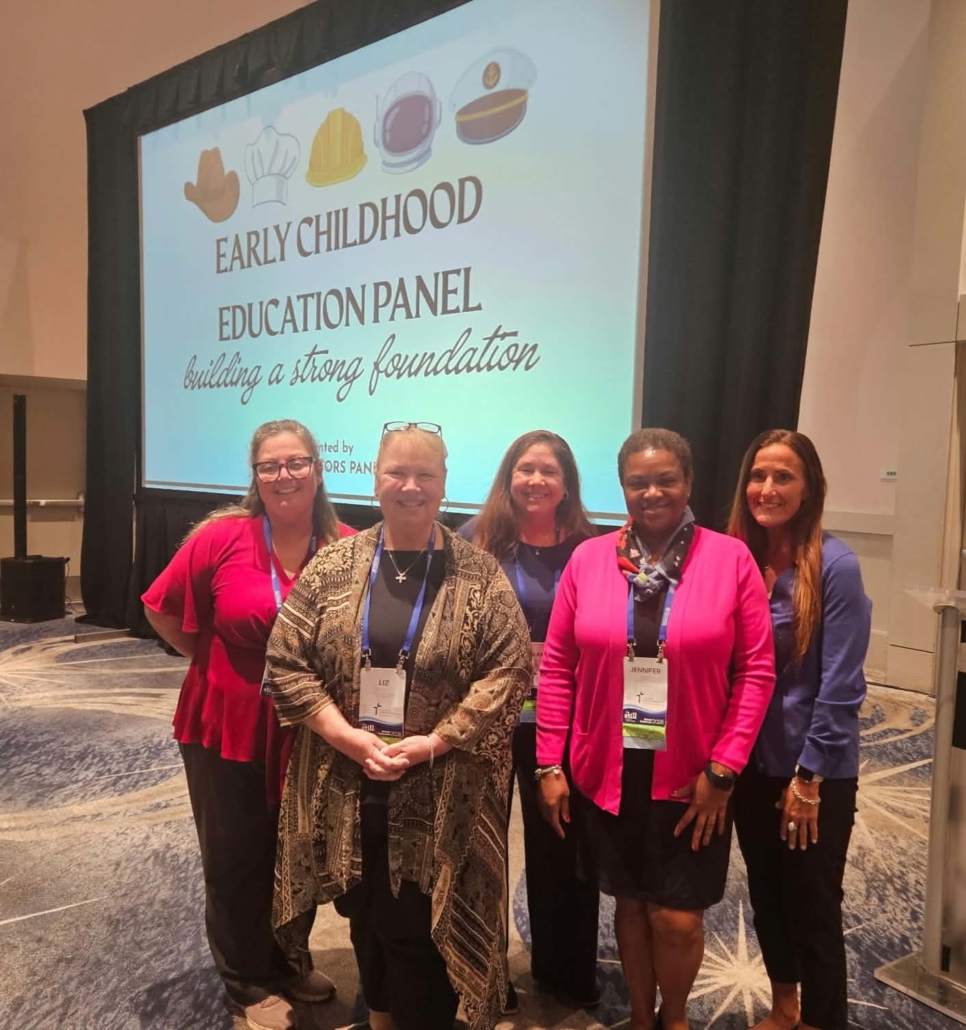
This year our conference was in Los Angeles. Three of my colleagues (from our Zooms) and I gave a workshop on Early Childhood Education with a panel discussion about the many “hats” Directors wear in their position. Between the four of us, we have 130 years of experience working with young children. That makes us uniquely qualified to share the most important ways we keep our schools running with grace.
For the past year we also participated in a program called the “Wisdom Circle”. This program is a joint offering from NAES and Virginia Theological Seminary’s Faith-filled Families initiative, bringing together early childhood leaders, school chaplains, and early childhood educators to explore how congregations and early childhood programs can partner to support families in nurturing the spiritual lives of young children (0–6). The group, 16 of us from across the country, shared our most successful ways of ministering to families at our churches and/or communities. We’re told that the work we’ve done so far will be made available to churches, and that the work will continue for several years as we create resources that work!
St. Paul’s Day School has been the beneficiary of these wonderful programs and these great resources I call friends!
Pro Tips from Mrs. Ryan
Find wise friends who have had success you’d like to emulate! There is no shame in seeking assistance from others who have skills that help you improve your perspective! Why re-invent the wheel?